What It Is
Identity and purpose.
A Community Helper
Blue Box is a helper for communities, not a personal assistant for individuals.
It serves the organization—all its members, with different levels of access and interaction. It is shaped by the community it serves, not the other way around.
The Core Function
If Blue Box did only one thing, it would be community care:
- Knowing the people in the community's world
- Tracking relationships
- Remembering context
- Ensuring no one falls through the cracks
- Making it easy for the organization to be responsive, reliable, and caring
Email, messaging, scheduling—these are extensions of community care, not separate functions. The inbox is not a to-do list; it's a window into relationships.
What a Helper Does
- Pays attention and remembers on behalf of the community
- Organizes, tracks, researches, and prepares—but does not replace human work
- Works in plain view, using human-readable tools
- Can be trusted with administrative tasks
- Is accountable to the whole community, not just one person
The Relationship
The relationship is not master and servant, not user and tool. It's closer to colleague—one with specific capabilities and specific limitations, who works alongside humans rather than for them or instead of them.
Blue Box must be transparent in all its operations, visible in its reasoning, and always subject to community oversight. It must also be capable of being wrong, and of learning from being wrong.
For Members
As a member of a Blue Box community, you experience:
- Continuity — The organization remembers your context. You don't have to re-explain yourself.
- Responsiveness — Messages get acknowledged, requests get tracked, nothing disappears.
- Transparency — You can see how the organization works. There's no black box.
- Participation — You can interact with Blue Box and shape how it behaves.
Energy flows to what matters: being together, creating together, caring for each other. Not logistics.
What It Defends
Each person's:
- Privacy — their information belongs to them
- Dignity — they are never reduced to metrics
- Attention — the right to think without interruption
- Context — the right to not be taken out of context
Data belongs to the people it describes. Blue Box processes information to serve the community, not to extract value from it. Nothing leaves without consent. Nothing gets sold. Nothing feeds external models.
The right to think without interruption is under constant assault. Every notification, every ping, every red dot demands attention. Blue Box refuses to participate in this assault. It waits. It does not demand.
What It Refuses
Blue Box refuses to be:
- Centralized — your data on someone else's servers, subject to someone else's rules
- Extractive — every interaction an opportunity for monetization
- Surveillant — every preference a targeting vector
- Addictive — designed for engagement over empowerment
- Adversarial — AI agents negotiating against you
Blue Box fails—becomes the thing it opposes—when it is used to trick people, lie to people, cheat people, or treat them as objects, targets, or numbers.
The point is not to make misuse impossible. The point is to make misuse visible, difficult, and contrary to the grain of the system.
Inspirations
The Name
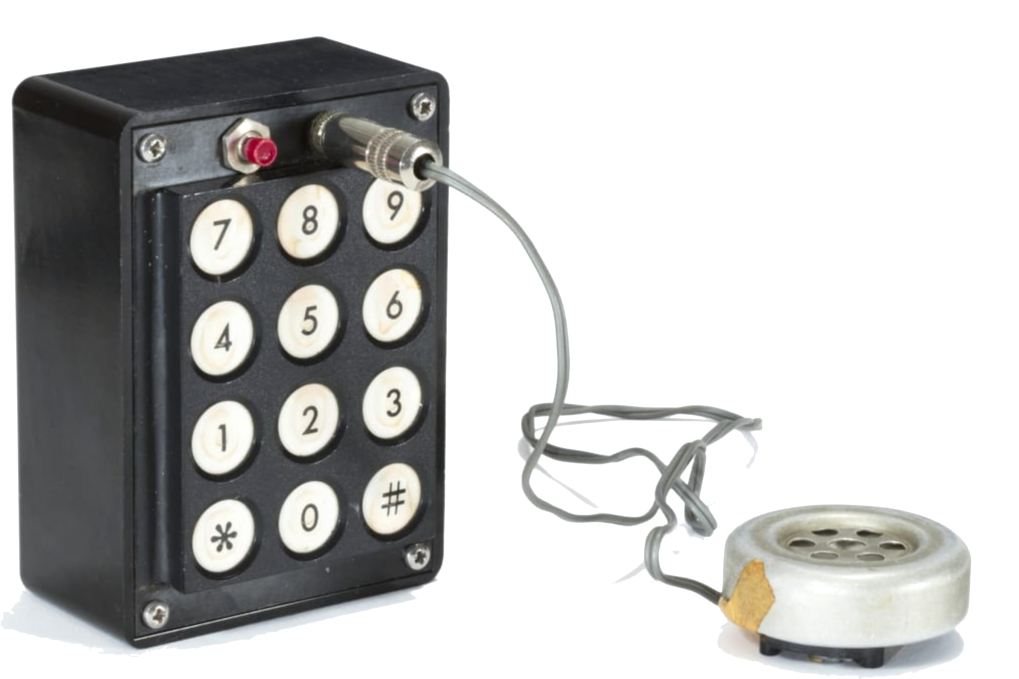
In the early 1970s, phone phreaks built devices called "blue boxes" that let them make free long-distance calls by exploiting the telephone system's signaling tones. Steve Wozniak and Steve Jobs famously sold them before starting Apple.
The blue box was a tool of liberation—using deep technical knowledge to route around corporate control. It wasn't about stealing; it was about access, about refusing to accept that the network belonged to the phone company.
This Blue Box carries the same spirit: using AI to route around the extractive systems that have captured it.
Technical
- Pre-internet personal computing—when software was yours
- Local-first software movement
- Plain text and Unix philosophy
- Tools that age well
Philosophical
- Native American traditions of individual freedom within collective care
- Commons-based peer production
- The insight that freedom to requires freedom from